Banned, Delayed, or Just Broken? Australia’s Youth Social Media Mess Turns 100 Days Old
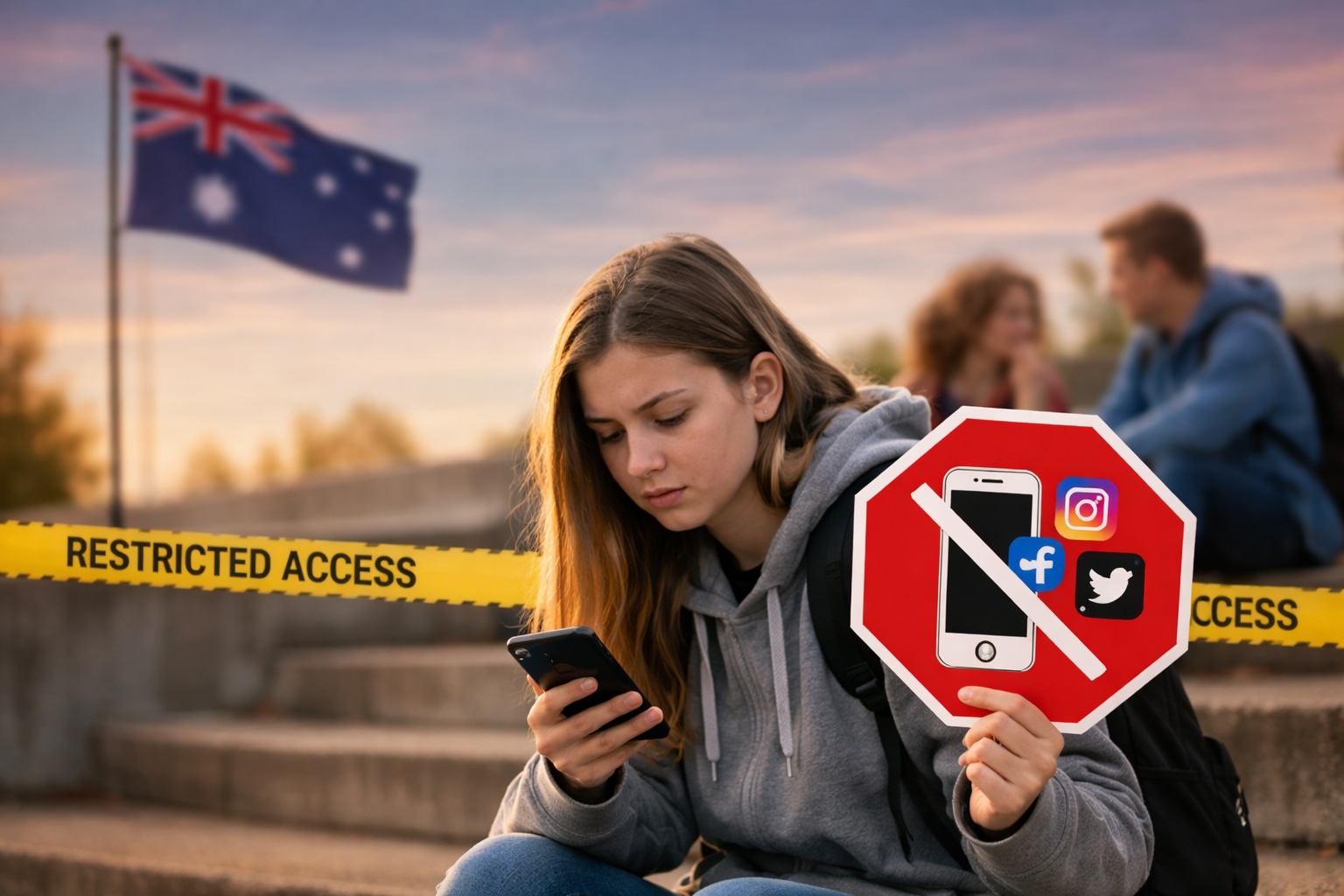
One hundred days into Australia’s social media ban for under-16s, and the evidence is already mounting that it has failed.
When Prime Minister Anthony Albanese signed the Online Safety Amendment Act last November, he called it a ban, a word with sharp political edges, conjuring images of protective barriers between children and the algorithmic abyss.
But when eSafety Commissioner Julie Inman Grant appeared before the UK House of Commons Science, Innovation and Technology Committee this month to update British MPs on the ban’s progress, she replaced the harsh language the government once used.
“We do refer to it as a social media delay,” she said, “because it isn’t an absolute ban.” Last week she repeated the framing at a Queensland University of Technology panel, where both she and activist Chanel Contos stuck carefully to “delay” language throughout.
The conflicting terminology isn’t a communications slip. It’s a window into the fundamental tension at the heart of this policy: the politics of appearing tough on Big Tech have collided with the messy reality of enforcing a law that affects nearly every teenager in the country and is providing a blueprint to social media-skeptical political classes around the world.
The political advantage of cutting kids off
The idea of “banning” social media to protect kids from harm is politically potent. It’s something French President Emmanuel Macron has called “the movement” in his own social media posts and has encouraged most other governments to follow. It’s a welcome distraction from the real problems those leaders face in their own countries, whether it be in France, Spain, the UK or elsewhere.
The results on the ground confirm the disconnect. Since the law took effect in Dec. 10, platforms have collectively deactivated nearly 5 million accounts belonging to Australian teenagers. That’s 5 million kids cut off from friend networks, group chats, sports communities, and social circles built over years. That wasn’t because parents decided they were ready to log off, but because a government in Canberra did.
Reddit has already filed a High Court challenge arguing the law violates Australia’s implied constitutional freedom of political communication, noting that many of the affected users will be voters within years. Many other suits will follow.
All this assumes, anyway, that the social media bans can or should be properly enforced. Early data suggests as much as 20% of Aussie teens are still accessing social media apps like TikTok or Snapchat using VPNs or other censorship-resistant technologies. That will only rise with time.
The age-verified internet
And the regulatory appetite is only growing. This week, six new Age-Restricted Media Codes took effect, requiring internet services in Australia, from AI chatbots to app stores and video games, to implement age verification technology before allowing access to any user who might be under 18. But to identify the kids, you need to identify everyone else. That means verifying age and ID for everyone who wants to touch a digital device.
Australian adults must now prove their age merely to use search engines and generative AI tools. Where does it end? You cannot regulate your way to a safer internet, and you certainly cannot do it by forcing every adult citizen to hand over sensitive personal data as a precondition for basic digital participation. That’s a recipe for more hacks, more leaks, and putting more online users into harm’s way. And to what end?
The science on social media bans for youth is often presented as settled. It isn’t.
Research published in JMIR Mental Health found insufficient evidence to support blanket bans as a remedy for youth mental health concerns. Vital support networks for kids who face disabilities or adversity are being cut off.
This is especially important because shielding teenagers from social media until 16 doesn’t prepare them for adult digital life. It delays the inevitable while removing the tools, community, and parental guidance that could actually help them navigate it. Social media today is communication infrastructure. Locking kids out of it doesn’t make them safer. It makes them ill-equipped.
The better alternative relies on technology and responsibility
Empowering parents to use the tech and tools already available to them. Parents who are actively involved in their children’s digital lives can already set screen time limits, review account settings, and make age-appropriate decisions based on their own child’s maturity. Schools can and should integrate media literacy into curricula.
These aren’t radical proposals, they’re what good digital parenting already looks like, without the government forcing anyone to show their ID to use the internet.
Australia sold this policy to the world as “the first domino.” As other countries — from the United States to the United Kingdom — consider copycat legislation, a hundred days in it looks less like a model and more like a cautionary tale: millions of kids lost their social circles, regulators can’t settle on what the law even does, and the surveillance infrastructure keeps expanding. Some dominos aren’t worth falling.
Published at the Consumer Choice Center.