Time to clip the wings of the car crash lawyers
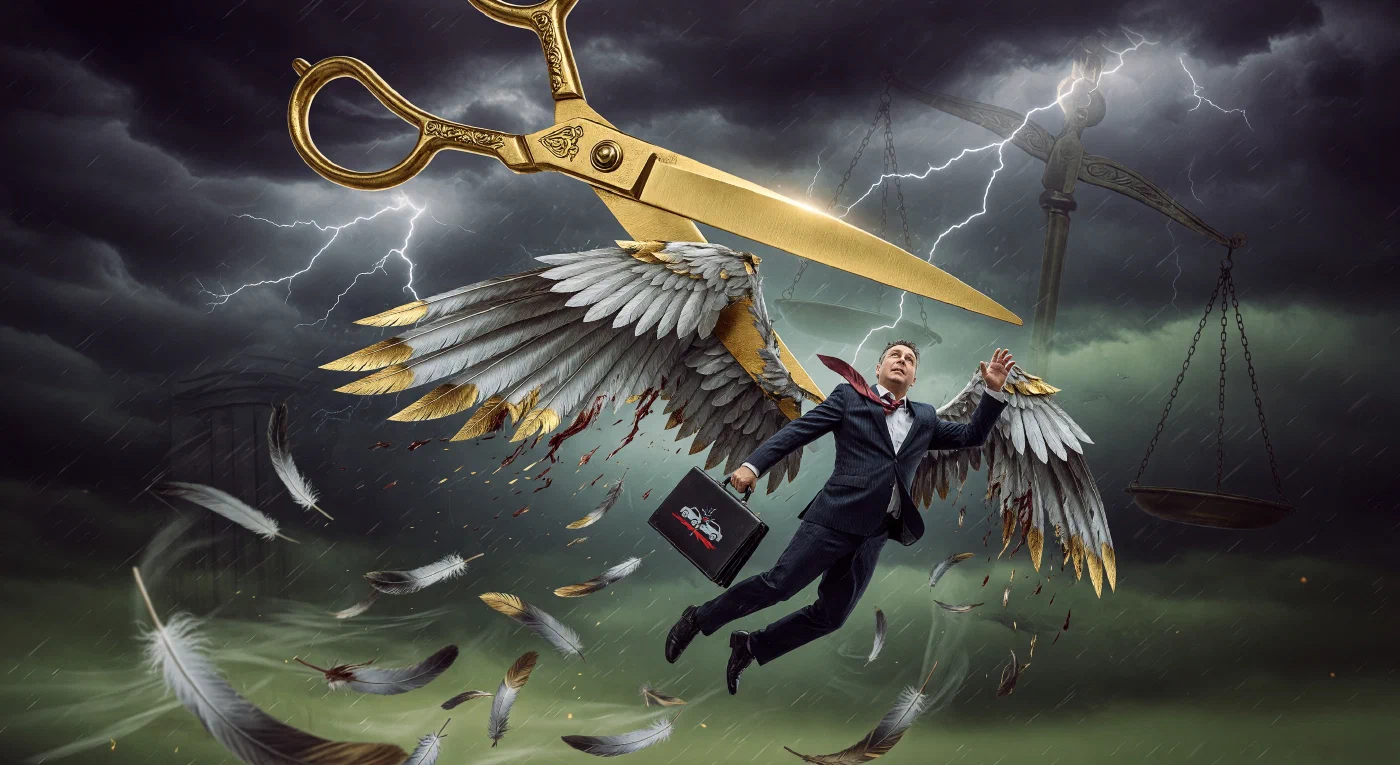
Imagine renting a U-Haul to move your stuff cross-country after accepting your dream job. After the stress of the move, the awful packing of boxes, and rolling down the highway, you end up in a fender bender.
Every American knows the process from there on is tedious: accident reports, police, insurance companies, and in the worst cases, lawyers. Even if it wasn’t your fault, you may get dragged into something for months or years that’ll end up sucking time and money.
Before 2005, that accident could have ended up in court not against any of the drivers involved, but U-Haul itself. In state vicarious liability law, because U-Haul happened to rent you that moving truck, it could be dragged into lawsuits in some states by insurance companies, drivers, or the property owner of anything damaged. That put U-Haul at additional liability risk with every rental, artificially raising insurance plans and jacking up rates for consumers. Higher insurance risks meant higher prices for everyone trying to rent a car.
The legislation that changed that was the Graves Amendment, passed in 2005. And consumers should thank their lucky stars, because it means fewer lawsuits and more affordable prices for rental cars, moving trucks, and corporate fleets. Two decades later, that quiet federal shield is one of the best consumer wins nobody talks about because it ended one of the most lucrative grifts in American civil court.
Seeing as it was a policy success, why not extend it to new modes of transportation we use, temporarily hire, and order from a daily basis?
A Worthy Upgrade
It’s time to upgrade the Graves Amendment so it can deliver for today’s needs, namely to the next generation of the sharing economy found in rideshare and ride-hailing companies like Lyft, Uber, peer-to-peer car sharing apps like Turo, grocery delivery services like DoorDash and Postmates, and more.
If you think lawyers haven’t already caught on to how consumers are moving around or having things delivered, and found a way to insert themselves, you’re of course mistaken. And that’s already costing you in higher insurance costs.
An Opportunity to Pass Savings to Consumers
And there’s no better sponsor for this fix than the lawmaker whose name is already on the original. The BUILD America 250 Act is led by Rep. Sam Graves (R-MO), the House Transportation Committee Chairman who authored the 2005 amendment in the first place.
The 2026 Transportation funding bill gives Congress a one-line opportunity to extend it where plaintiff lawyers have already migrated. Billboard advertising for car crashes involving ride-hailing services, peer-to-peer car shares and delivery platforms is now a growth industry: out-of-home legal services advertising spending is up 260% since 2017.
It’s perhaps helpful that Rep. Sam Graves is sponsoring the bill, the author of the amendment that has already unlocked millions in savings for consumers.
The nearly half a trillion dollar reauthorization over five years is in committee now, heading into a markup likely this week with a Sept. 30 deadline forcing action. The Graves extension is not yet in the base text, but there is still time and momentum for it to be included. Lawmakers should fold it in before the markup closes. The BUILD America 250 Act already takes a position on vicarious liability for autonomous trucks. Congress is willing to write tort rules into this bill and it should go further.
Here is the problem the Graves Amendment originally solved: Plaintiff lawyers had figured out that juries would award eye-watering damages against Hertz or Enterprise whenever a rental car got into an accident, even when the company had done nothing wrong.
The fact that a “large company” owned the vehicle somehow served as a synonym for fault. Rental rates climbed. Insurance pools shrank. So Congress, on a bipartisan vote, preempted state-law vicarious liability for vehicle owners who neither caused the crash nor employed the driver. Of course, direct negligence claims remained fully intact as they should.
The greatest thing about this rather wonky fix is that it actually worked. Rental and leasing markets stabilized, costs to consumers dropped and 20 years of litigation has confirmed the rule is narrow and well-tailored. Congress folded it into SAFETEA-LU, the 2005 surface transportation reauthorization the current bill replaces, so there is precedent for following this path. Fixing lawsuit problems inside the highway bill is itself a 20-year-old tradition that is worthy of taking up again.
New Mobility Begets New Lawsuits
The same playbook has now migrated to the next wave of mobility. Rideshare platforms like Uber and Lyft, plus car-sharing services like Turo and Getaround, neither own the vehicle nor employ the driver. That hasn’t stopped the plaintiff bar from treating them as deep pockets in exactly the way Graves was written to prevent.
Florida has already run the experiment. Since the state’s 2020 TNC liability reform and its 2023 tort overhaul, the share of an average Uber fare going to government-mandated insurance has dropped two percentage points in a single year. Fare growth has run six points below the rest of the country, Florida riders have saved tens of millions of dollars, and statewide auto insurance rates are down 20%. The pass-through to consumers isn’t theoretical, it’s measurable.
In Florida alone, as we documented last year, there is a $27 billion-dollar per year industry tied to billboard liability attorneys, captive medical providers and a court system that serves them. The nation’s largest law firm, Morgan & Morgan, alone spent $218 million on legal services advertising in 2024 — 8% of every legal services ad in America — and currently airs a national TV spot titled “Injured in a Lyft or Uber".
And the squeeze keeps tightening. Between 2021 and 2024, Uber’s insurance cost per trip rose 50%, even as the number of reported claims fell. In California, New York, New Jersey, and Massachusetts, state law requires $1 million per-incident rideshare coverage on every trip. The math isn’t subtle: insurance costs are climbing faster than the harm they’re supposedly pricing in, and the entire bill lands on riders.
Every dollar of that gets priced into a fare, an insurance premium or a delivery charge. The single mother taking an Uber to a night shift, the small restaurant relying on DoorDash to stay open, the suburban dad paying $300 a month for auto coverage, all of them are subsidizing a litigation model Congress already declared illegitimate when the defendants were rental companies.
Folding a Graves-style extension into the 2026 reauthorization fixes that.
Lower Costs for Mobility Consumers
The drafting is straightforward: apply the same no-vicarious-liability shield to any transportation network company or peer-to-peer car-sharing platform that doesn’t own the vehicle and doesn’t employ the driver, while preserving every direct-negligence claim against the company itself.
Roughly 30 states have already done this for peer-to-peer car-sharing; Florida and a handful of others have moved on rideshare and ride-hailing. A federal floor to cover each of the next-generation categories finishes the job and passes on the savings to consumers. If we want to expand affordability, this is an easy way to do it.
This is the rare congressional move that costs nothing, raises nothing and saves real money for working consumers. No appropriation, no new agency, no rulemaking. Just a single, narrow clarification that the rule Congress wrote in 2005 means what it said.
The 2005 highway bill ended the practice of car crash lawyers suing rental companies and moving companies for someone else’s accident. The 2026 highway bill should finish the job by upgrading it for next-generation mobility, but only if Congress puts it in the base text before markup closes.