First Class For All: The policy fixes to upgrade the flying experience
Making Flying Great Again means embracing competition, ousting TSA, reducing taxes, and opening the skies.
Making Flying Great Again means embracing competition, ousting TSA, reducing taxes, and opening the skies.
I started taking planes when I was only 20 years old.
Before then, as a typical North American, I was a dedicated and enthusiastic driver. Hours and hours of interstate drives up and down the eastern seaboard and in between, from Key West up to Quebec City, from Toronto to North Carolina and back. I used paper maps and road signs before smartphones gave us live GPS apps. And I know what it's like to sleep in the front seat at a rest stop.
But since I opened my heart (and wallet) to taking planes, I've logged miles on most continents, snagged the best and worst seats, fallen just shy of priority status, and have spent time sauntering both in dilapidated airports in Myanmar and pristine Nordic airports in Denmark and Sweden.
Air travel is a marvel of human achievement. There's no doubt about it. Civilization today would not exist without it.
Despite that, there's nothing that fliers love to do more than complain about the entire experience. Delays in baggage, rubbish seat assignments, ungodly connecting times, endless taxiing on the runway, etc. "I'll never fly that airline again!"
It's like the classic Louis C.K. bit about the fliers who complain about WiFi while flying in a metal tube thousands of miles up in the sky:
"It was the worst day of my life! First of all we didn’t board for 20 minutes. And then we got on the plane and they made us sit there on the runway for 40 minutes. We had to sit there. Oh really, what happened next, did you fly through the air incredibly, like a bird? Did you partake in the miracle of human flight, you non-contributing zero? You’re flying! It’s amazing! Everybody on every plane should be constantly going ‘oh my God, wow!’ You’re sitting in a chair in the sky!"
Air travel is obviously incredible. But it can always be better.
There are actually some ways we could use policy to improve the flying experience for millions of American fliers. Here's my humble list that I'll outline with the acronym OSTC: airport ownership, security, taxes, and cabotage. It's my best shot, and I'd love to hear more.
OWNERSHIP: Who Actually Owns the Airport
The United States prides itself on being a capitalistic country, but its main transportation hubs are overwhelmingly owned and operated by governments.
The 15 busiest airports in the United States, for example, are all owned directly by municipalities or entities they control. Atlanta (ATL), Dallas/Fort Worth (DFW), Chicago (ORD), Denver (DEN), Charlotte (CLT), all owned by the cities they're located in.
In Europe, meanwhile, 3 out of 4 passengers fly through airports with private shareholders. Why is that?
Europeans are better airport capitalists
Düsseldorf Airport, which won accolades as 2026's top airport based on passenger experience according to the Consumer Choice Center, is a public-private partnership owned half by the city of Düsseldorf and half by investors, including one of Canada's top pension funds, PSP Investments. Airports in Antwerp, Lisbon, and Zagreb, meanwhile, are fully privatized. Major airports in the London area (Heathrow and Gatwick) are privately owned. If you happen to be an investor, you'll find the airports of Vienna, Athens, Zurich, Paris, Frankfurt, and Madrid on the stock market, meaning they're publicly traded.
With the latest figures, 47% of EU airports have some level of private ownership, even more so at busier airports. Even those that are public are structured as separate companies with governments as the lone shareholders. It makes a difference.
As an entity owned by shareholders, private airports must be accountable to their boards and investors and must be better than the competition in nearby cities and regions. They must keep passenger traffic high, attract top airlines, fund construction and expansion costs, and contend with airport labor demands, all while not being able to be bailed out by taxpayers or the state. And many of them do so with healthy profits.
This need for providing profitable airports that passengers want to use means providing a superior service and product. Everyone who compares landing at JFK in New York versus the Madrid or Zurich airport will understand this fully.
Can America do it?
While Europeans are happy to be airport capitalists, America struggles. After over 120 years of commercial flights, practically all airports are owned by localities, burdened with the same problems that befall nearly every public infrastructure project or program.
Private airports, and even those with private operators, benefit from having better productivity, more efficiency in revenue and budgeting, and have much more access to capital.
Congress has had a privatization program in place for nearly 3 decades, but only two ever made the leap and only one (San Juan airport in Puerto Rico) remains standing (and it's booming btw). But can it be done elsewhere?
We can try.
This week I had an article in Carolina Journal on the renewal of Charlotte Douglas airport's lease in my home state of North Carolina.
I made the case (humbly again) that rather than just approving yet another lease, the City Council should entertain the idea of letting a private operator take control and inject some market discipline. It'd be a healthy and good experiment that would undoubtedly re-align the incentives needed to improve air travel and the airport experience. And it would remove public officials from having to make decisions that politicians have no business deciding: which terminal receives upgraded bathrooms, who gets access to the corner gates, and which advertiser should be allowed on the walkways. Let them be run like the businesses they are.
As Reason Foundation notes, ten of the world's top 25 airports are privatized and enjoy great customer satisfaction. None of those are in the United States. If we can reform the Airport Investment Partnership Program then we can make it happen here too.
SECURITY: The TSA's clock has run out
Earlier this year, while looking into President Trump's budget requests and the typical government shutdowns that hamstring airport security, I wrote about the advantages we'd see from giving fliers a private alternative to the TSA:
The arguments about putting TSA on the chopping block are not a new invention of the Trump era or even fever dreams of libertarian think tanks. Even the godfather of the TSA recognized that it became a bureaucratic behemoth within just a decade of its creation. U.S. Rep. John Mica (R-FL), an architect of early TSA legislation, later regretted the agency’s creation, calling it his “little bastard child.”
“The whole thing is a complete fiasco,” Mica said. He advocated dismantling the agency entirely and privatizing airport security. His own committee found the switch could save taxpayers as much as 40%.
At present, 20 airports across the US are using the Screening Partnership Program to have private contractors conduct screenings rather than an agency of the Department of Homeland Security. This includes major hubs like San Francisco and Kansas City.
These are airports where government shutdowns in Washington, D.C. don't impact whether or not you can make your flights to Hawaii or Austin, and where private contractors keep their jobs only if they're doing well. The results are telling.
Research conducted by Michael Turtz of Florida Atlantic University found that select airports with private security process passengers much faster than those with TSA monopolies:
Although the data is limited and a full regression analysis should account for passenger and flight volume, checkpoint lanes, staffing levels, weather and airport fixed effects, the preliminary comparisons indicate substantial differences in reported security-delay minutes during March 2026. MIA recorded more than four times the security-delay minutes of SFO, while ALB recorded more than 13 times those of SFB. These differences are consistent with the possibility that TSA staffing disruptions contributed to longer screening delays at TSA-operated airports, although the current analysis does not establish causation.
What's more, according to the Trump Administration's last budget request, an estimated $52 million could be saved if airports were encouraged to use private security instead of the TSA.
TAXES: The government's cut is enough
Anyone who has flown a budget airline has seen the line-item expense for "the government's cut," meaning the ticket's share that must be paid to the government in taxes. We take it for granted, but it directly contributes to the higher cost of flying.
The current rates on a single ticket include a 7.5% ticket tax, a flight segment tax of $5.30, a Passenger Facility Charge of up to $4.50, and a "September 11 Fee" of $5.60. Those costs are even higher on international flights, which add arrival and departure taxes, inspection fees, and foreign governments' own charges. This means that on most routes, taxes make up nearly a fourth of the entire ticket cost.
If we want to better the flying experience, we can no longer tax every passenger a fourth of their ticket price just to fly. We must cap these taxes and fees, have them transparently shown, and consider cutting them to make flights much more affordable for consumers.
CABOTAGE: The invisible hand of global flight competition
Probably the most controversial policy fix I'll mention here is a repeal of cabotage laws, which reserve domestic transportation only for national companies both in the air and sea.
According to 49 U.S. Code § 41703 - Navigation of foreign civil aircraft, foreign airlines are not allowed to carry passengers from one US point to another. That means that if a British Airways flight arrives at Washington Dulles, it cannot carry on and pick up new passengers en route to Los Angeles or Denver.
Meanwhile, countries like Australia and New Zealand allow each other's airlines to fly domestic routes in both countries, and Australia lets foreign investors own domestic airlines.
Chile, the real global pioneer, began its liberation of air cabotage in 1979 and fully opened its skies without the need for reciprocity in 2012. Since then, ticket prices on domestic flights have dropped by nearly 42% and passenger traffic has more than doubled.
The EU, no surprise, has a single aviation market that allows airlines to criss-cross and provide services wherever they think they can make a profit, creating the largest cabotage-free zone in the world that allows fliers some of the cheapest international flights in the world.
In 2021, President Joe Biden issued an executive order to promote more competition in the US economy. I lamented at the time that repealing cabotage laws like the Jones Act for ships or the restrictions on foreign airlines weren't high on the list, because they absolutely should be.
Can we dream big?
Most, if not all, of these are big policy fixes that would take a lot of political courage to apply. Many incumbents would oppose any changes that risk upsetting the status quo and their rents.
But the system has to be built to serve consumers, not the incumbents who profit from the status quo. Because we all deserve an upgrade.
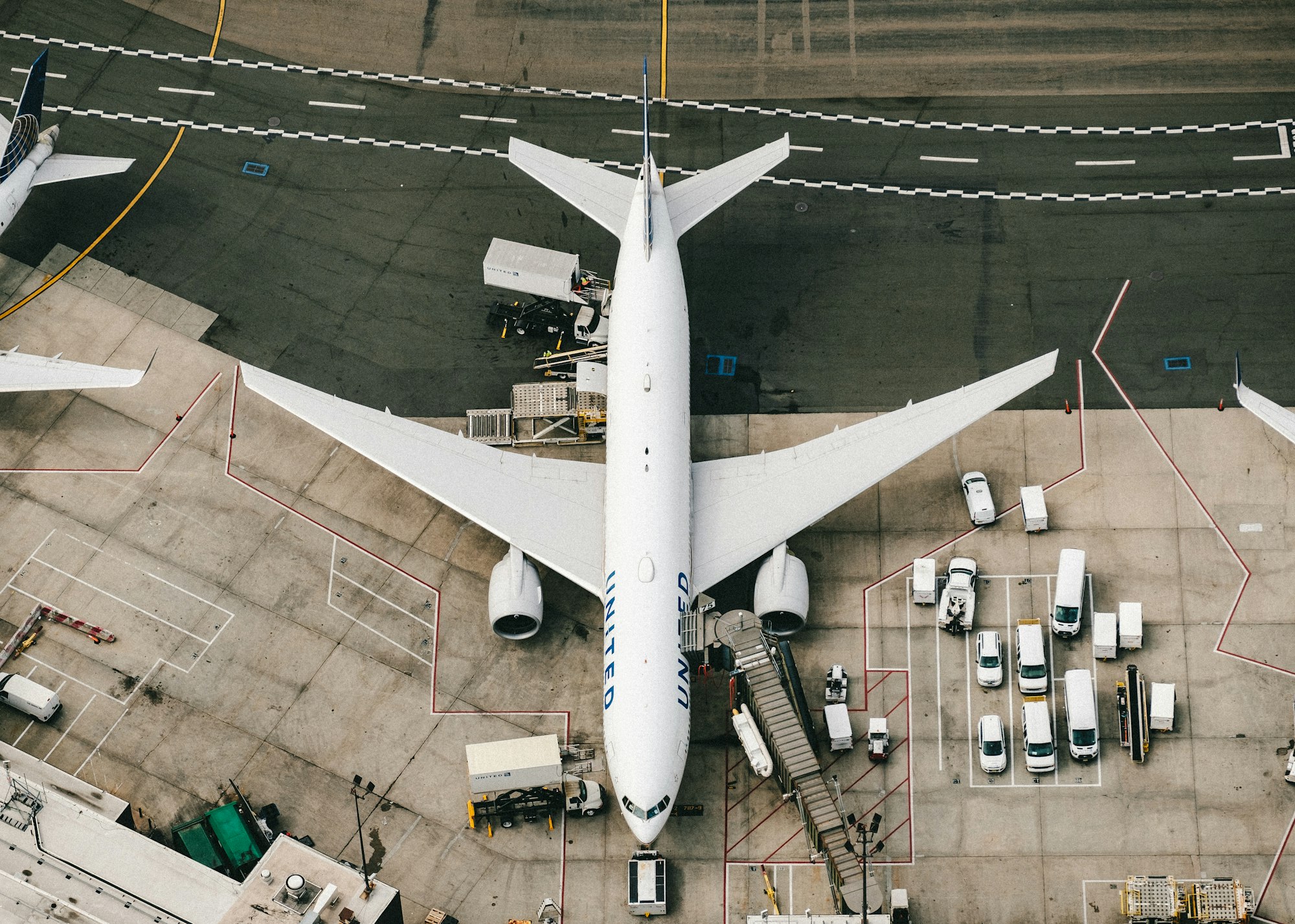
Photo by Chris Leipelt / Unsplash.
Published on The Upgrade (archive #1).